
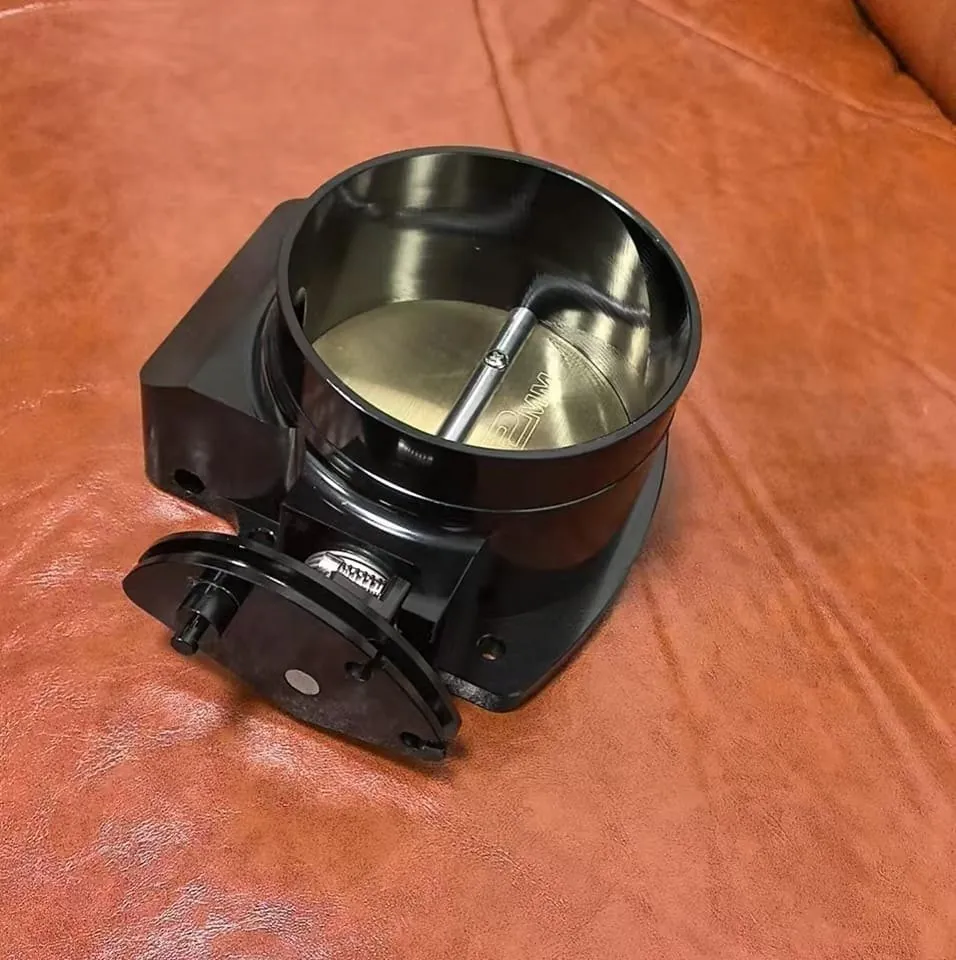
Two parts the same size can come back with quotes that differ by three times. The difference is rarely the machine rate. It is how much setup, cutting time, finishing and inspection the part actually needs — and how clearly the drawing tells the shop what is required.
This is how a CNC machining quote is built, line by line, and which changes on the drawing move the number fastest.
The five cost buckets
| Cost bucket | Typical share | What moves it |
|---|---|---|
| Material | 20–40% | Stock size and buy-to-fly ratio, alloy, availability |
| Programming and setup | 10–25% | Number of setups, fixtures, CAM time, first article |
| Machining time | 25–45% | Removal volume, feature count, tool changes, tolerance |
| Finishing | 5–15% | Anodize type, blasting, painting, marking, lot charges |
| Inspection and QA | 5–10% | First article, in-process checks, report, material certs |
Material: the part you never see
Material is usually quoted from the smallest standard stock that contains the part, plus enough for clamping. A part that fits inside 100 × 100 × 50 mm, cut from a thicker plate, can lose 40% of the block as chips. Two ways to reduce that: design to standard stock sizes, and let the shop quote bar stock for turned parts.
Alloy and temper change both price and availability. 6061 plate is stocked almost everywhere; 7075 plate in thick sections and titanium are ordered in, and that lead time becomes part of the quote. If you have flexibility on alloy, say so — it can be worth more than a discount on machining.
Setup and programming: paying for the first part
Every new part needs a plan: how it is held, which faces are machined in which order, which tools are called, how the first article is checked. A 3-axis part with features on five sides can mean three or four setups. Each setup adds fixture time, a zero point and a chance for error.
This is why the first unit of a new part costs far more than the hundredth — and why “can you make one prototype?” and “can you make 500?” get different unit prices. The fixed work is spread over a different number of parts.
Quoting tip: if a feature can be reached from an existing setup, say so on the drawing. If you can accept a small change that removes a setup, it is often the single biggest saving available.
Machining time: removal volume, not part size
A small part with a deep pocket and a 0.5 mm wall can take longer than a larger simple plate. Cycle time is driven by:
- How much material is removed and how fast the tool can cut it
- The number and depth of pockets, and whether the tool can reach them
- Tool changes and the number of different tools
- The tolerance and finish, which set the feed and the number of passes
In aluminum, roughing removes material quickly; the finish pass is where the time goes. In stainless and titanium, the whole cut is slower and tool wear is a real cost. A useful rule: if a feature needs a long, thin tool, expect the quote to reflect it.
Tolerance and finish: the multiplier
Tolerance is the quiet cost driver. A part held to general tolerances can be machined and checked quickly. A part with a ±0.005 mm bore, a 0.01 mm flatness callout and Ra 0.8 µm needs a different process: more setups, more passes, more measurement and a higher scrap allowance. The full explanation is in CNC Machining Tolerances: What ±0.005 mm Really Means.
The practical advice: put the tight tolerance only on the features that need it, and say why. A drawing with three critical features and a sensible general tolerance is cheaper than one with a blanket ±0.01 mm — and usually makes a better part.
Finishing: the outside processing line
Anodizing, bead blasting, passivation, painting and laser marking are usually bought in lots. That means a minimum lot charge: 10 small parts and 100 small parts can cost almost the same to anodize. Color and type matter too — Type II clear or black is common and inexpensive; Type III hard anodize adds thickness and cost; two colors or a masked area add handling.
If the finish is cosmetic, send a sample or a photo with the RFQ. “Black anodize” can mean a matte Type II, a glossy Type II or a hard-coat black — three different looks and three different prices.
Inspection: what the report costs
A standard shipment includes dimensional checks on the features called out on the drawing. A first article inspection with recorded values, a full dimensional report, material certificates or a PPAP-style package is additional work and appears in the quote.
If you need traceability, ask for it up front. Adding a report after the parts are made means measuring them again — the same work, at a worse time. Our inspection equipment is listed on the quality page.
Seven drawing changes that cut cost fastest
- Loosen tolerances that do not affect function. Moving a non-critical feature from ±0.02 to ±0.1 mm can remove a setup or a finishing pass.
- Add radii to internal corners. A sharp internal corner forces a smaller tool and a slower cut; a radius matched to a standard end mill cuts faster.
- Avoid deep, narrow pockets. Keep depth under about 3× the tool diameter where the design allows.
- Use standard thread sizes and callouts. Non-standard threads need special tooling or single-point work.
- Minimize the number of setups. Design so as many features as possible can be reached from one side.
- Choose 6061 where strength allows. It is cheaper, more available and easier to finish than 7075.
- Specify one finish, not three. Each additional finish or masked area adds handling and lot charges.
What to put in an RFQ
- A 3D model (STEP) plus a 2D drawing with tolerances, threads and finish
- Quantity now, and expected annual volume
- Alloy and temper — or the load and environment, so we can recommend one
- Finish and color, with a sample if it is cosmetic
- Critical dimensions and any inspection report required
- Target delivery date and destination
A complete RFQ is quoted faster and more accurately. A missing finish or quantity is usually the reason a quote comes back with a question instead of a price.
Why two shops quote differently
Two quotes for the same part can differ because the shops assume different things:
- One assumes a 3-axis part; the other plans a fourth setup for a feature on the back
- One includes anodizing in-house; the other adds a lot charge from a partner
- One quotes general tolerances; the other quotes every dimension to the tightest value on the drawing
- One includes a dimensional report; the other does not
When you compare quotes, compare scope, not just the number. The cheapest quote is often the one with the most assumptions left out.
Frequently asked questions
How much does CNC machining cost?
There is no single rate. A simple aluminum bracket in a batch of 50 is usually tens of dollars per part; a tight-tolerance housing with several setups and anodizing can be several times that. The quote is built from material, setup, cycle time, finishing and inspection — the five buckets in this guide.
Why is a prototype more expensive per part than a production run?
Setup and programming are spread over fewer parts. A prototype also often includes first-article inspection and a fixture that production would amortize. The per-part price falls as quantity rises because the fixed work is divided by more pieces.
What is the minimum order quantity?
We quote from 5–10 pieces for most parts, and single prototypes are possible. Below that, setup and finishing lot charges dominate the unit price.
How fast can I get a quote and parts?
Send a STEP or PDF with quantity, material and finish. Prototypes typically ship in 3–7 business days after drawing approval; production runs take 2–4 weeks depending on material and finishing.
Send your drawing with quantity, material and finish.
We will break the quote down so you can see where the cost is — and which drawing change would save the most.
Or email yueli@promachiningtech.com · WhatsApp +86 152 9880 5789